A restaurant’s skill shows in its signature dishes, but its conscience shows in its banchan (side dishes). There is the kitchen that spoons in banchan bought elsewhere, and the kitchen that seasons and ferments them itself before dawn. On the table the difference may look invisible, but chopsticks always know. Today we record, one by one, the eight banchan that appear on the Eolchigi table.
In short, all eight banchan at Eolchigi are made by hand in our own kitchen, and that daily repetition forms the foundation of a table set for 40 years.
First, the principle. Every banchan at Eolchigi is made in our own kitchen. None is bought in. Seongchan-iksu (誠饌益壽), the calligraphy hung before the kitchen that holds that food made with sincerity lengthens the life of those who eat it, applies not only to the naengmyeon and galbi but equally to every banchan plate.
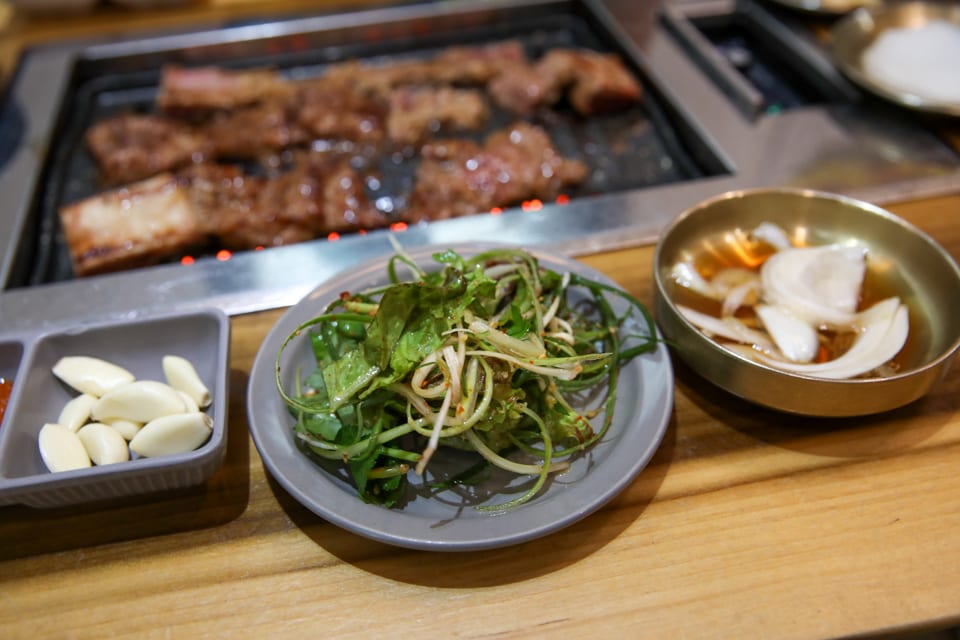
Pachae-muchim, the Ace of the Grill Table
The eldest of the eight banchan is pachae-muchim, thinly sliced scallions tossed in a tangy dressing. It works as a reset button that cuts through the richness of galbi and pork belly. As a bite of meat and a chopstick of pachae alternate through the meal, it is usually the pachae plate that empties first. The combination of pachae-muchim laid over yukjeon even has its own following, and that pairing gets its own full story in Part 25.

Yeolmu Kimchi, Another Name for Refreshing
Crisply fermented yeolmu kimchi (young radish kimchi) is a multi-role player that works both the naengmyeon table and the grill table. A bite between spoonfuls of naengmyeon adds tartness, and a bite between pieces of meat keeps the palate clean. The old rule that a restaurant with good kimchi has its basics in order holds true here as well.
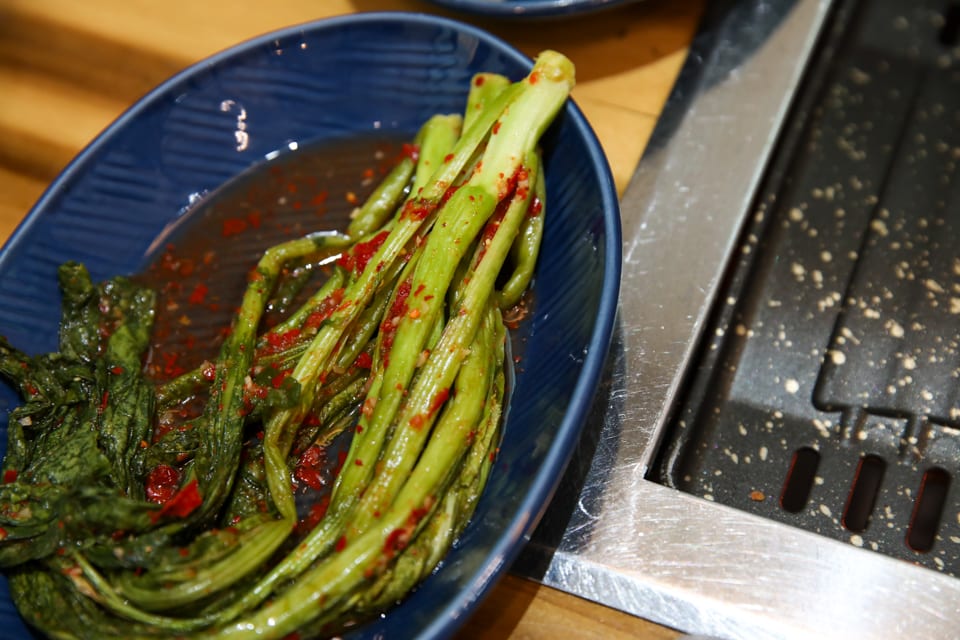
Myeongi-namul and Maneuljjong-jangajji, the Savory Side
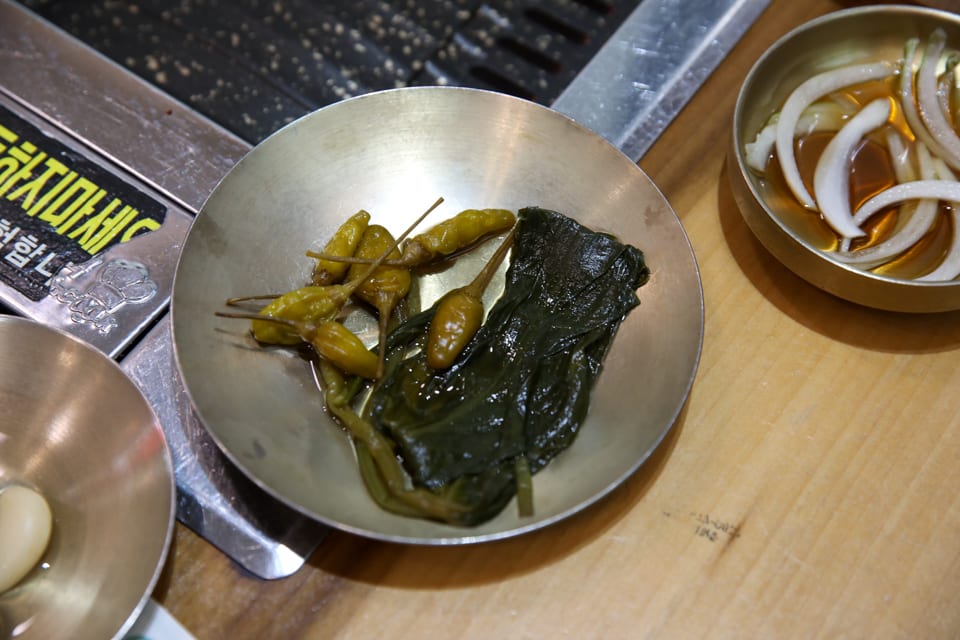
Fragrant myeongi-namul (wild garlic leaf pickle) makes a wonderful wrapper for a piece of galbi. The savory, well-fermented maneuljjong-jangajji (garlic scape pickle) is a rice thief in its own right and a fine supporting act at the drinking table. With pickles, skill shows in curing time and seasoning balance, and because we make ours in-house, the saltiness stays in check.
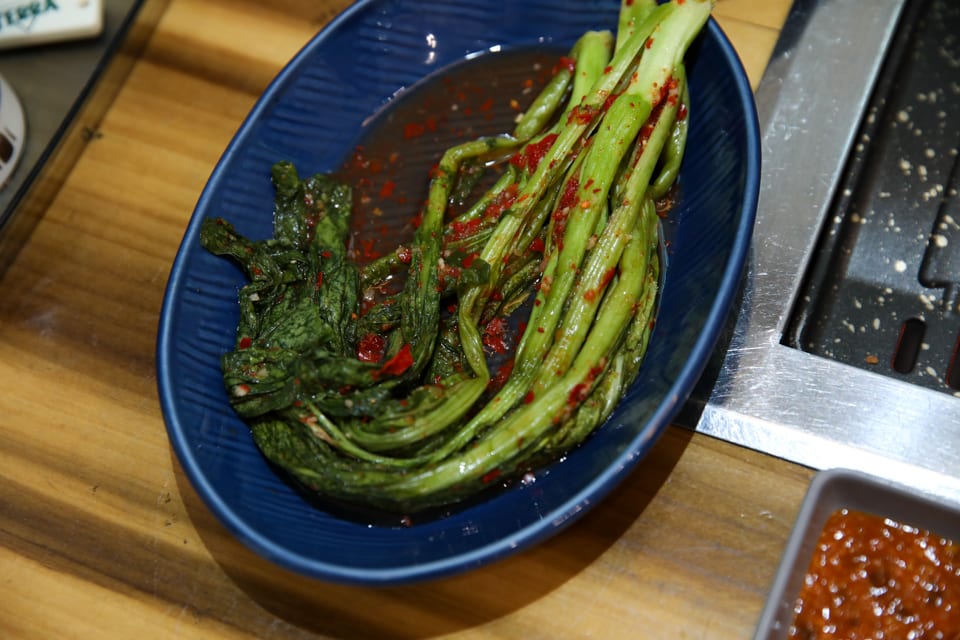
Ssam-mu, Pickled Onion, Ssam Greens and Lettuce Salad, the Fresh Side
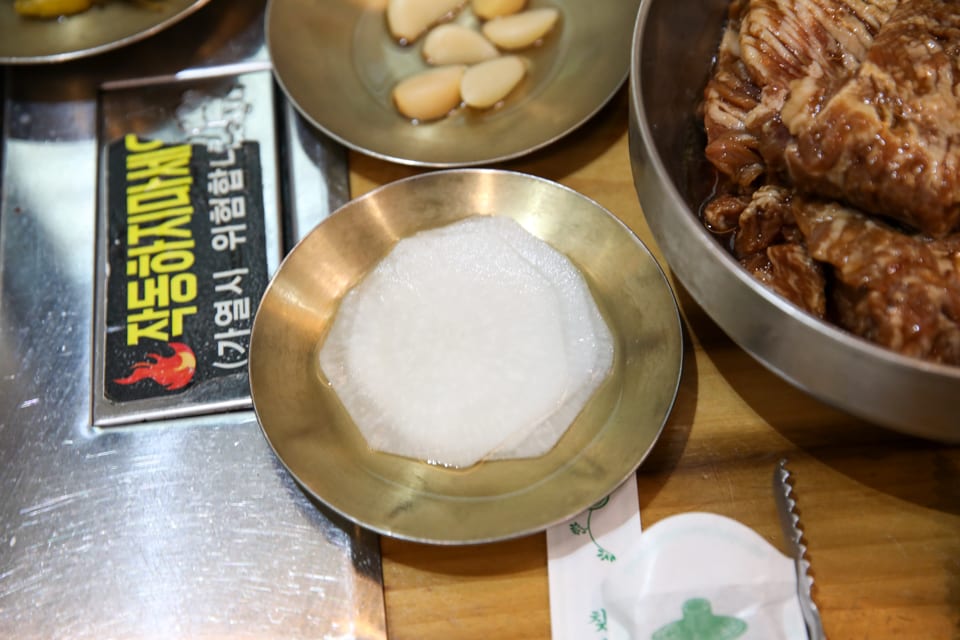
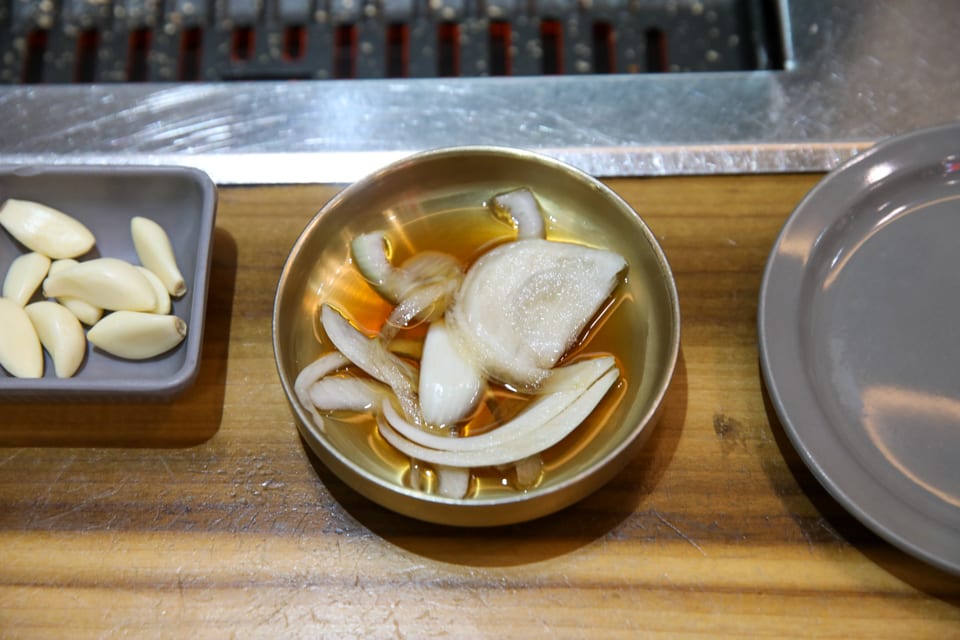
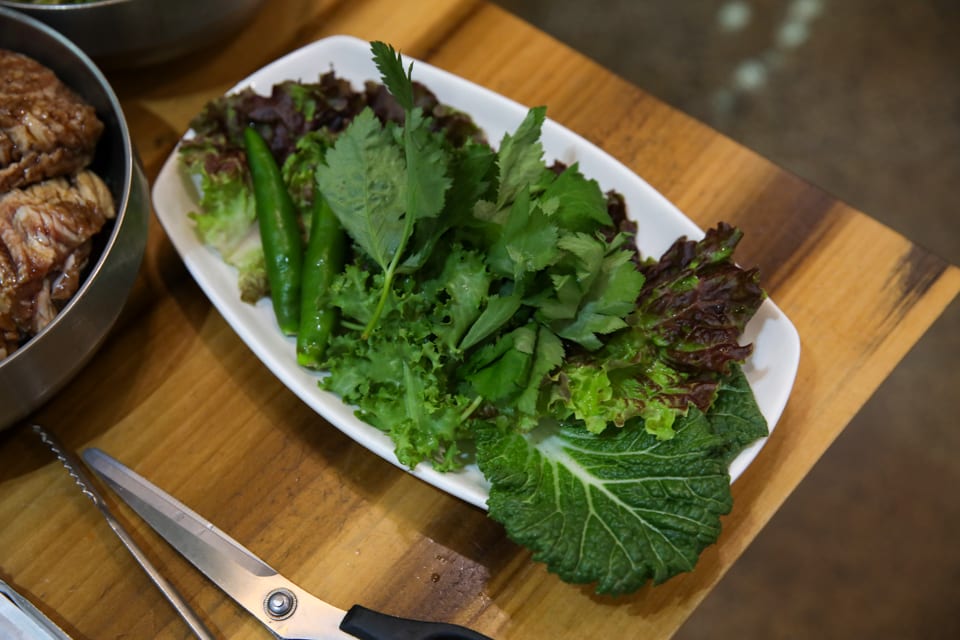
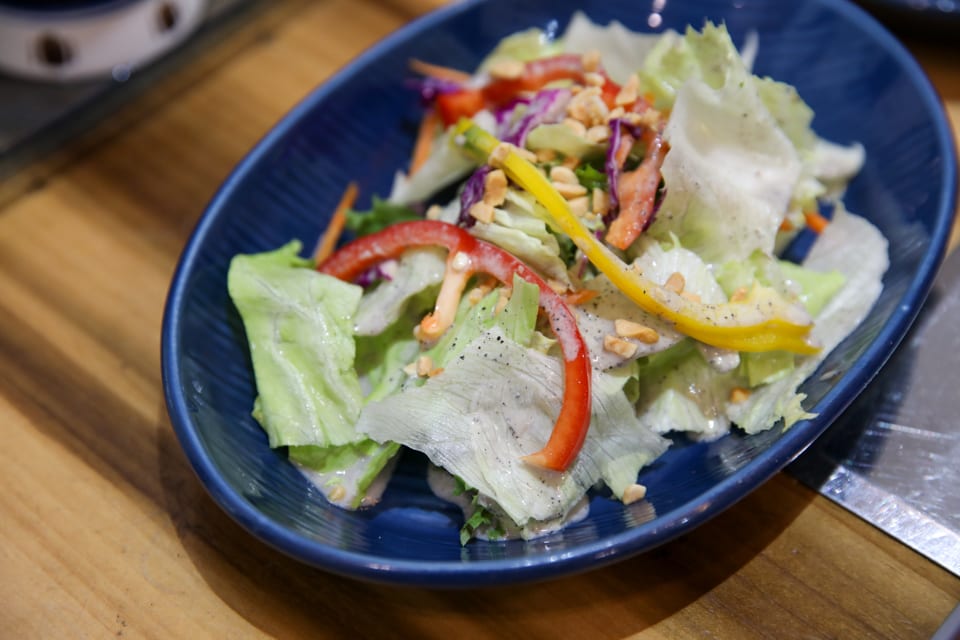
Tangy ssam-mu (pickled radish for wraps) and pickled onion cut through the richness of grilled meat, fresh ssam greens bring texture, and lettuce salad gives the meal a light opening. For vegetables, freshness is everything, so each day’s preparation is the flavor itself.
Why We Insist on Making Everything by Hand
Using delivered banchan would make the kitchen’s life easier. But the table knows, and our regulars know. Refusing to compromise for convenience is the way of a kitchen that hangs Seongchan-iksu on its wall. The trust built over 40 years did not come only from the 48-hour naengmyeon broth; it came just as much from the pachae tossed fresh every day and the ssam vegetables prepared every morning.
Some guests tell us they feel bad asking for a refill because the banchan is so good, but there is no need to feel that way. If you would like more, just let us know.
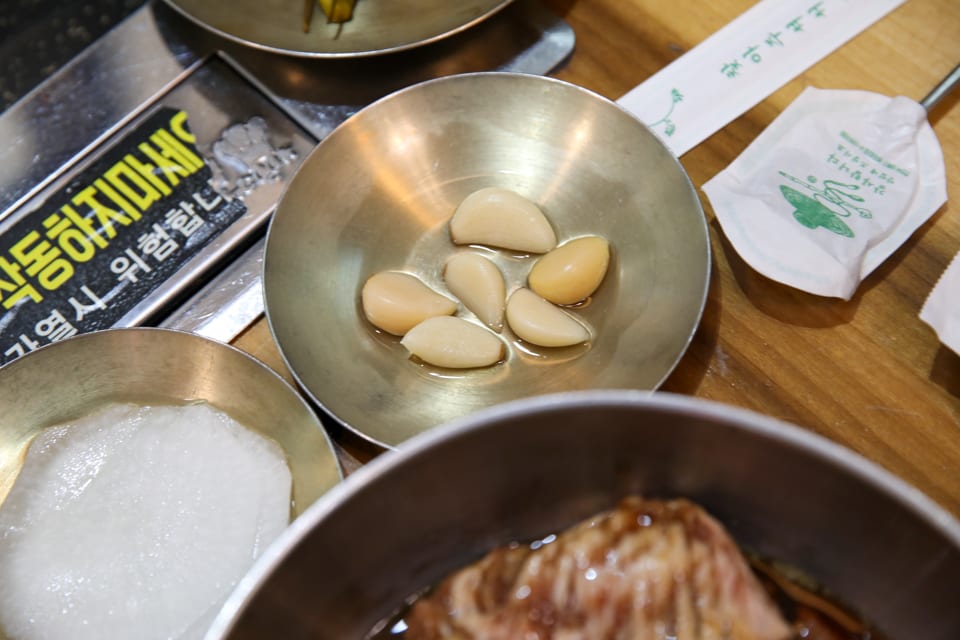
Table Pairings, Seen Through the Banchan
| Order | How the Banchan Shine |
|---|---|
| A bowl of naengmyeon | Yeolmu kimchi adds tartness, pickled onion adds a clean finish |
| The galbi table (Part 8) | The trio of pachae-muchim, myeongi-namul and jangajji pickles |
| The pork belly table | The full fresh lineup of ssam greens, ssam-mu and pachae |
| Yukjeon | Topped with pachae-muchim, served alongside jangajji pickles |
Every Banchan Has Its Own Timeline
The eight banchan each follow a different rhythm of time. Pachae-muchim and the salad are made-that-day dishes. They begin to wilt the moment they are tossed, so they cannot be prepared ahead. Yeolmu kimchi is a fermented dish. It is mixed and left to wait until the tartness rises to the right point before it reaches the table. The jangajji pickles are seasonal dishes. They are cured when the ingredients are in season and then serve the table for a full year. A day’s hands, a few days’ waiting, and a season’s preservation all meet on one table, which makes these small plates, in truth, an exhibit of time.
Why Banchan Is Harder at a Naengmyeon House
At a grill restaurant, the flavor of the meat covers for half of a banchan’s flaws, but at a naengmyeon table there is nowhere to hide. Set beside a clean, delicate broth, any banchan that is even slightly off in seasoning shows immediately. That is why the yeolmu kimchi on the naengmyeon table has to hit its tartness with real precision, and it is also why the naengmyeon table is really the proving ground for Eolchigi’s banchan. To be called the banchan of a naengmyeon house with 40 years behind it means having passed that test every single day.
A Culture of Refills
Many guests feel bad about asking for a banchan refill, but at a kitchen that makes everything by hand, a refill is not something to be embarrassed about, it is a welcome sign. Which banchan empties first is the kitchen’s report card for the day. A day when the pachae-muchim disappears unusually fast, a day when the yeolmu kimchi gets praised. That repetition has refined the recipes over 40 years. Please ask freely whenever you need more. That is simply part of the banchan culture here.
How to Judge a Restaurant by Its Banchan
Here is an old rule of thumb for choosing a restaurant in an unfamiliar city: look at the banchan. Every restaurant puts effort into its signature dish, but the banchan is where a kitchen’s everyday skill and conscience actually show.
There are three concrete points to check. First, the condition of the kimchi. If it is still crisp and tart, ingredient turnover and management are in good shape. Second, the freshness of the tossed dishes. If the pachae and the salad still have their crunch, they were made that day. Third, the overall balance. If something tangy, something savory and something fresh are all present in fair measure, the kitchen knows how to design a table. Trying this rule of thumb on the Eolchigi table is the first exercise this article recommends.
The Place of Banchan in a Korean Table Setting
A Korean table is completed as an ensemble of lead and supporting roles. The structure in which banchan surround the rice, soup and main dish is a design that shapes not just the balance of flavor but the rhythm of the meal. That is because the back-and-forth of chopsticks between the main dish and the banchan, a repeated give and take, is the core of how Korean food is eaten.
A kitchen that buys in its banchan is, in effect, handing half of this ensemble to someone else. Making all eight banchan in-house means the kitchen tunes every instrument on the table itself, which is why even a single bowl of naengmyeon arrives at Eolchigi as a full ensemble.
Visit Information
107 Cheonsu-ro, Jinju-si, Gyeongsangnam-do (Juyak-dong), open every day from 10:00 to 21:00, phone +82-55-753-9233, on-site parking available. The table where banchan plays its most vivid role is the galbi table (Part 8), and the full story of pachae-muchim continues in Part 25. The complete story behind the Seongchan-iksu motto is in Part 27.
One Morning’s Banchan Schedule
Before closing this article, let us imagine, as a schedule, one morning in which the eight banchan come together. Early in the morning, once the vegetables arrive, the day of the fresh-side dishes begins. Ssam greens are washed and trimmed, lettuce is prepped, and radish and onion are set into their pickling brine. In the mid-morning kitchen, scallions are sliced thin, rinsed in cold water to soften their sharpness, and left waiting for the moment they are tossed. On the fermented side, the state of the yeolmu kimchi is checked, and on the seasonal side, today’s portion is drawn from the jangajji crock.
The banchan plates that reach the first lunch guest’s table are the result of that morning. The mission of Seongchan-iksu does not live only in the broth pot; it rests with the same weight in every single movement of that morning’s hands. This article’s request that you not simply pass over the small plates on the table is, in the end, a request to notice that morning.
The Conclusion of This Banchan Story
Closing this record of eight banchan, here is the conclusion. A restaurant’s advertising is done by its signature dish, but a restaurant’s proof is done by its banchan. Advertising can be dressed up, but the eight plates that reach the table every single day are a place where dressing up cannot be sustained.
The next time you sit down to an Eolchigi table, take a moment to look over the banchan plates before the naengmyeon and galbi. The crunch of the pachae, the tartness of the kimchi, the seasoning of the jangajji. The daily test those small plates pass is, in truth, the substance behind Eolchigi’s 40 years. And chopsticks that have confirmed that substance will trust the bowl that follows all the more.
A Closing Word for Eight Plates
We close this record of eight banchan here. If, on your next visit, the small plates set before you no longer look ordinary, this article will have done its job. The kitchen’s morning of tossing and curing fresh every day is repeating again today. Come and see the results of that morning for yourself.
Appendix, the Order for Checking Banchan
When your table arrives, check it in this order. Is the pachae still crisp? Is the yeolmu kimchi’s tartness on point? Is the jangajji seasoning balanced? If all three pass, there is nothing to worry about in the main dish that follows. The banchan is a test this kitchen sits every single day, and an answer sheet our guests grade every single day as well.
Frequently Asked Questions
Can I get a refill on banchan?
Yes. Feel free to ask whenever you need more. Since everything is made in-house, a refill request is actually a welcome sign for the kitchen.
Can I get banchan to go by itself?
Banchan is served alongside a meal, so please ask about takeout based on a food menu order and we will guide you from there.
Are there any banchan suitable for children?
Ssam-mu, lettuce salad and myeongi-namul are not spicy and fall on the milder side. For the full table setting, please see the guide in Part 1.
How many banchan are served?
Depending on the table order, around eight banchan are typically set out. Every one of them is made in-house as a matter of principle.
Which banchan is the most popular?
At the grill table, pachae-muchim is the plate that empties first. At the naengmyeon table, yeolmu kimchi is the regular refill.
Can banchan be ordered for shipping?
We do not offer shipped orders separately. Banchan is prepared only in the amount needed for that day’s tables at the restaurant.
Are the jangajji pickles made in-house?
Yes, including the maneuljjong-jangajji, all of them are cured in our own kitchen. They are cured in season and then serve the table for the full year.
Which mild banchan can children eat?
Ssam-mu, lettuce salad and myeongi-namul are on the milder side. Start with the non-spicy plates when serving a child.
I feel bad asking when a banchan runs out.
A refill is not something to feel awkward about, it is genuinely welcomed. Which plate empties first is the kitchen’s own report card.
Does the banchan lineup change with the seasons?
The fresh vegetable dishes follow the freshness of each season, while the jangajji pickles cured in season carry the table through the year. The core lineup itself stays the same across all four seasons.
Can I find out today’s banchan in advance?
Since only that day’s portion is prepared, we would rather leave it as a small surprise to discover at the table. The lineup rotates with the seasons.
Isn’t it wasteful if leftover banchan gets thrown out?
Because we only make the amount needed for that day’s tables, waste stays low. It is another advantage of making everything in-house.
Could the banchan alone finish a bowl of rice?
Yes, since the seasoning in our house-made banchan is strong enough on its own. The one catch is that adding a piece of galbi tends to turn one bowl of rice into two.
Recommended Reading
 A Table of Jinju Beef Short Ribs, a Record from Order to the Last BiteIf you have read this story about a restaurant that makes every banchan by hand, this article is the natural next step, carrying the thread into what makes a good Jinju beef short rib restaurant.
 The Complete Guide for Anyone Looking for a Jinju Naengmyeon Restaurant, Eolchigi in Juyak-dong If any questions remain, this article answers the rest. It is the companion page to this story about a restaurant that makes every banchan by hand.
Official Reference Information
- [Official Local Government] Official materials related to a restaurant that makes every banchan by hand can be checked on the day-trip course guide page of Jinju Tourism (the official Jinju City tourism portal). Jinju Tourism (Official Jinju City Tourism Portal), Day-Trip Course Guide
- [Public Corporation] Reading the Jinju healing-trip article published by the Korea Tourism Organization’s Discover Korea (Daehanmingguk Guseokguseok) alongside this piece can make your visit to a restaurant that makes every banchan by hand more accurate in its planning. Korea Tourism Organization, Discover Korea (Daehanmingguk Guseokguseok), Jinju Healing Trip Article
The links above are simple references, confirmed to be reachable, pointing to the relevant topic pages of public institutions and public portals. The terms of use for each institution’s materials follow that institution’s official conditions, including any KOGL (Korea Open Government License) type it has indicated, and this article does not reproduce or quote the copyrighted work of any institution.