We know the confusion of opening the menu for the first time after you sit down. That is why we made this guide: a complete menu guide for anyone searching for the Eolchigi menu before a visit. It sums up what each of the 12 dishes is, who it suits, and what to pair it with, all in one place.
Let’s start with the price list. Prices follow the in-house menu board, so please confirm them at the time of your visit.
| Category | Dish | Price |
|---|---|---|
| Cold Noodles | Mul-Naengmyeon (Cold Noodles in Broth) | ₩12,000 |
| Cold Noodles | Bibim-Naengmyeon (Spicy Mixed Cold Noodles) | ₩13,000 |
| Cold Noodles | Seokkeum-Naengmyeon (Half & Half) | ₩13,000 |
| Specialty | Yukjeon (Pan-Fried Beef) (per plate) | ₩25,000 |
| Grill | Marinated Beef Ribs (250g) | ₩30,000 |
| Grill | Marinated Pork Ribs (250g) | ₩14,000 |
| Grill | Fresh Korean Pork Belly (150g) | ₩14,000 |
| Grill | Grilled Bulgogi (Seokswae) (per plate) | ₩30,000 |
| Meals | Galbitang (Short Rib Soup, Pot Rice) | ₩16,000 |
| Meals | Hanwoo Bulgogi Mushroom Hot Pot (Pot Rice) | ₩15,000 |
| Meals | Seafood Soft-Tofu Set (Pot Rice) | ₩12,000 |
| Extra | King Dumplings | ₩7,000 |
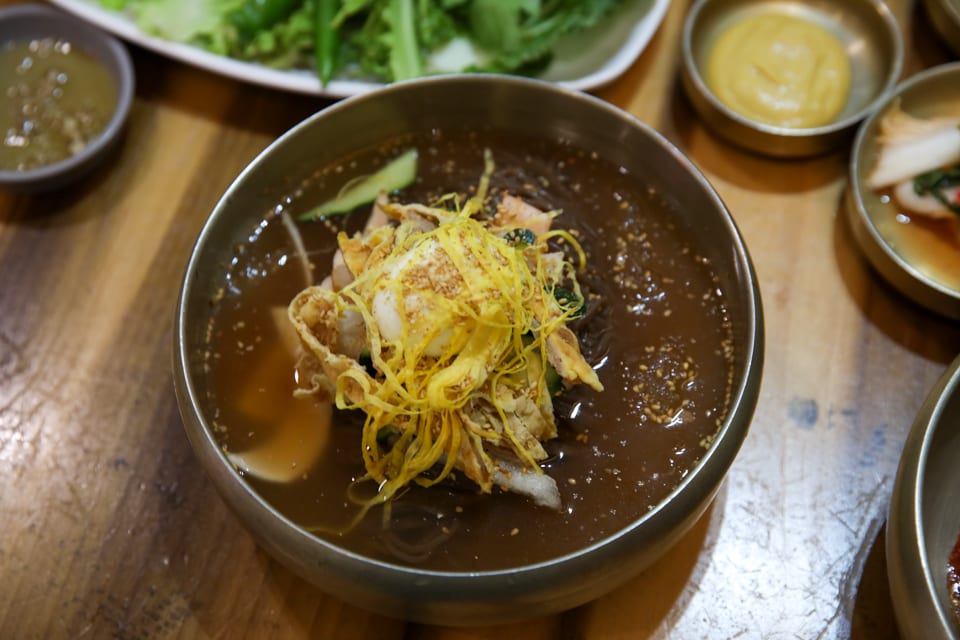
Three Cold Noodles, the Heart of the House
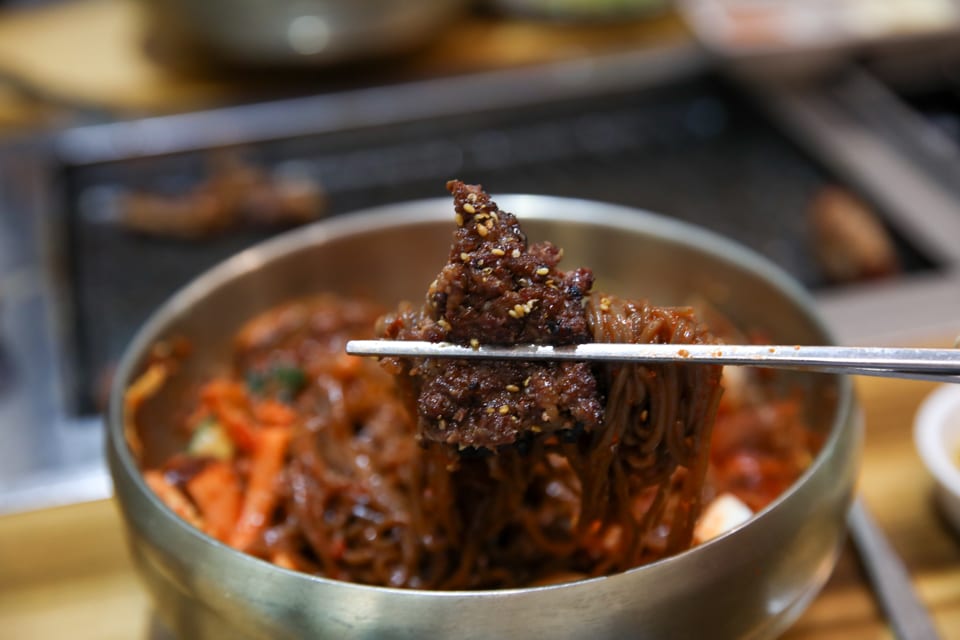
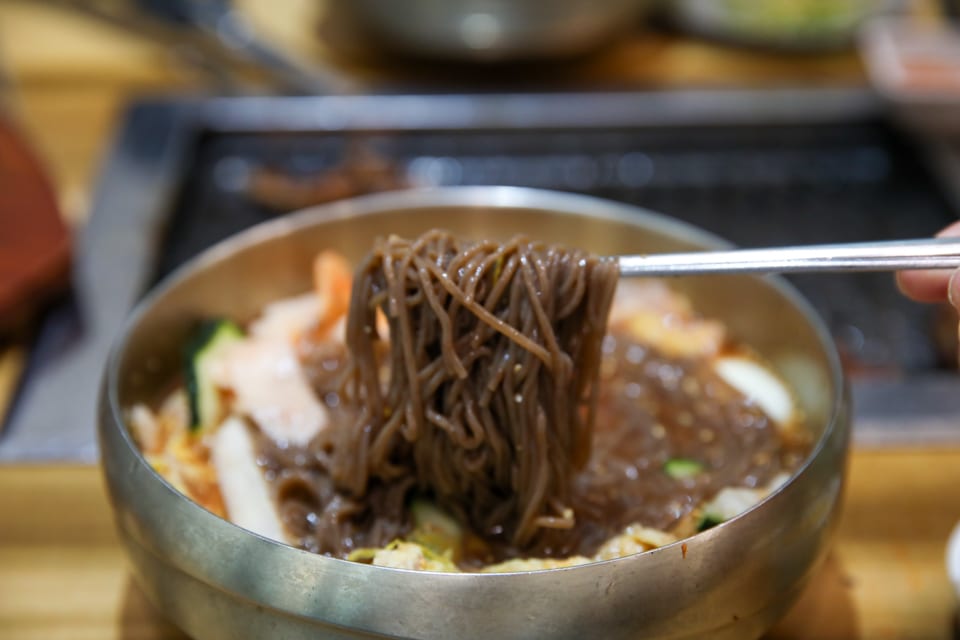
Mul-naengmyeon is the original Jinju naengmyeon, its broth built in three stages: hanwoo marrow bones and pheasant simmered for 48 hours, layered with South Sea seafood and finished with dongchimi. Bibim-naengmyeon is the tangy side, its sauce made from grated pear and apple and topped with seasoned skate. Seokkeum-naengmyeon lays broth beneath the sauce, letting you taste both styles in one bowl. All three bowls start with five-day cold-aged buckwheat noodles and a beef jeon topping as standard.
Choosing is simple. If you love broth, go for mul. If you love sauce, go for bibim. Can’t decide? Go for seokkeum. On a first visit, seokkeum is a safe bet.
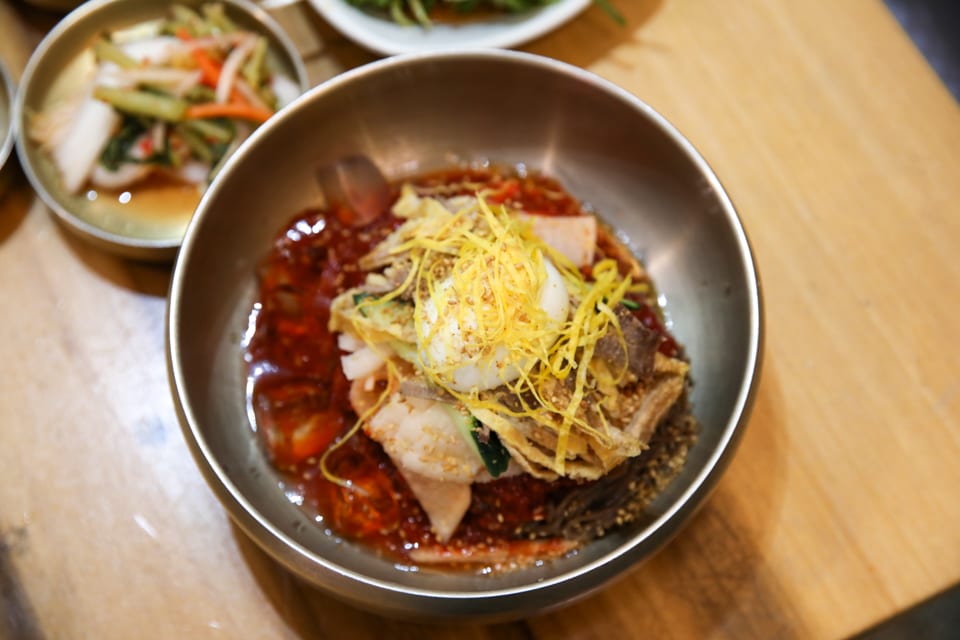
Yukjeon: From Topping to Signature Dish
Beef sliced thin, coated in egg and pan-fried, Jinju style. It goes on top of naengmyeon as a garnish, but many guests order a whole plate on its own. Dipping it into the naengmyeon broth is the Jinju way to eat it, and it works equally well as a side dish for kids and a snack for the adults’ table.
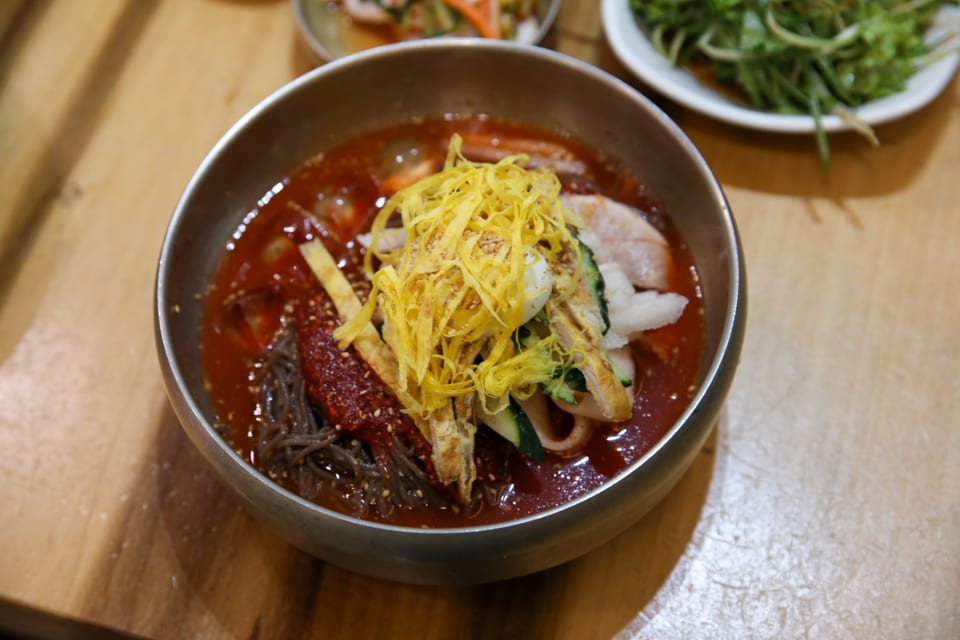
Four Grilled Dishes, the Stars of Dinner
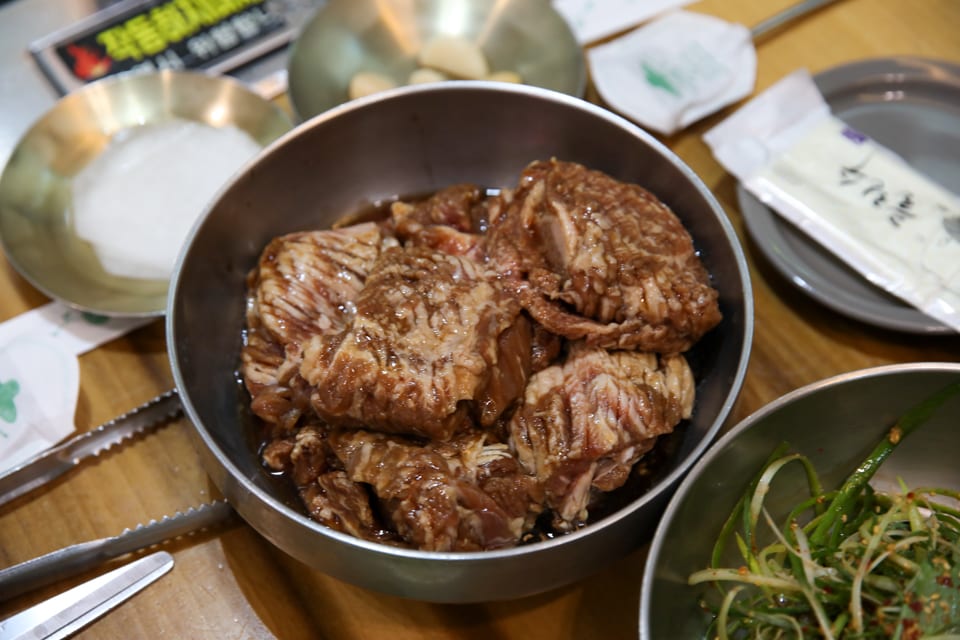
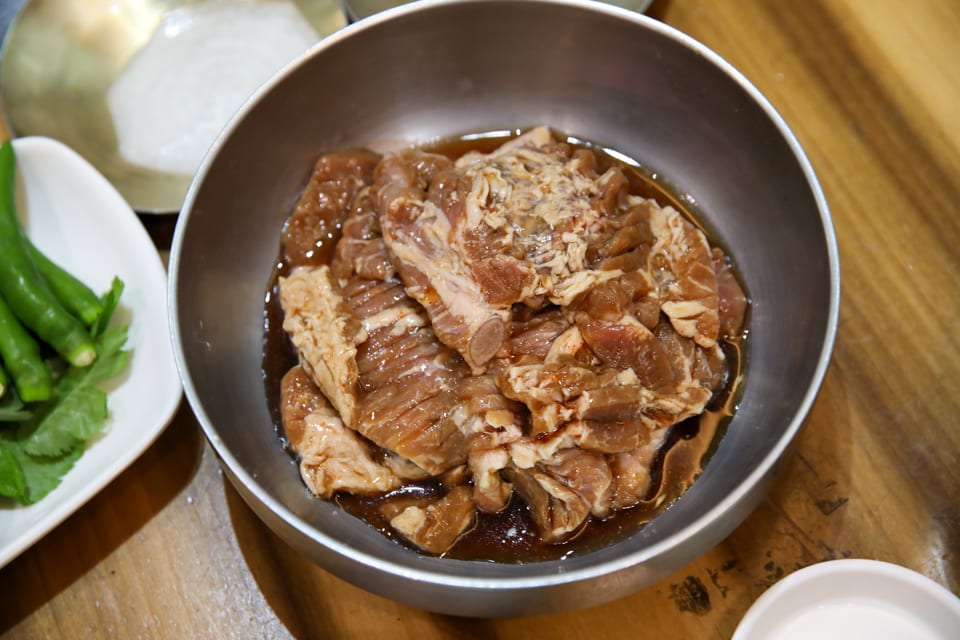
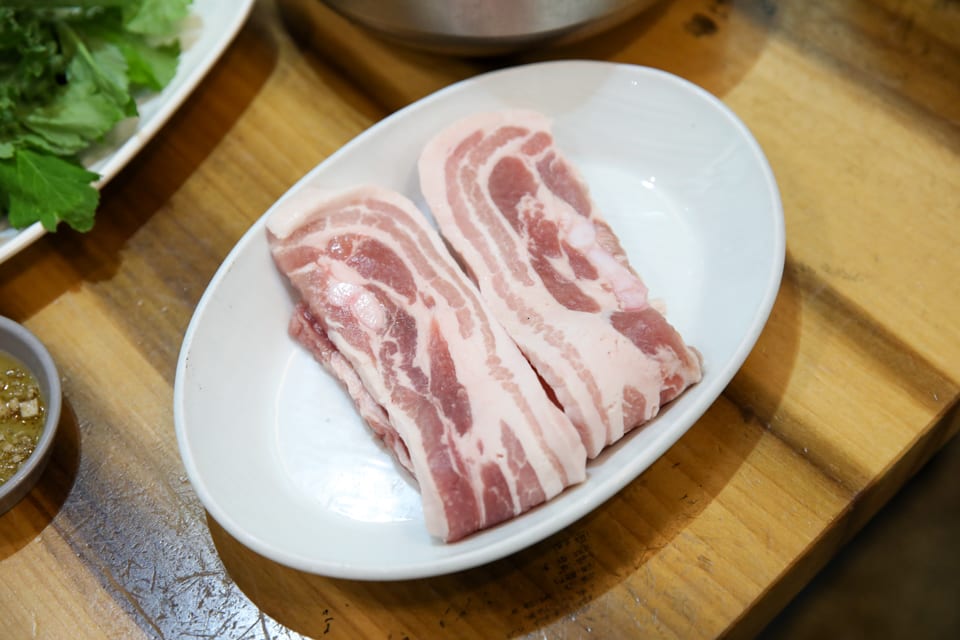
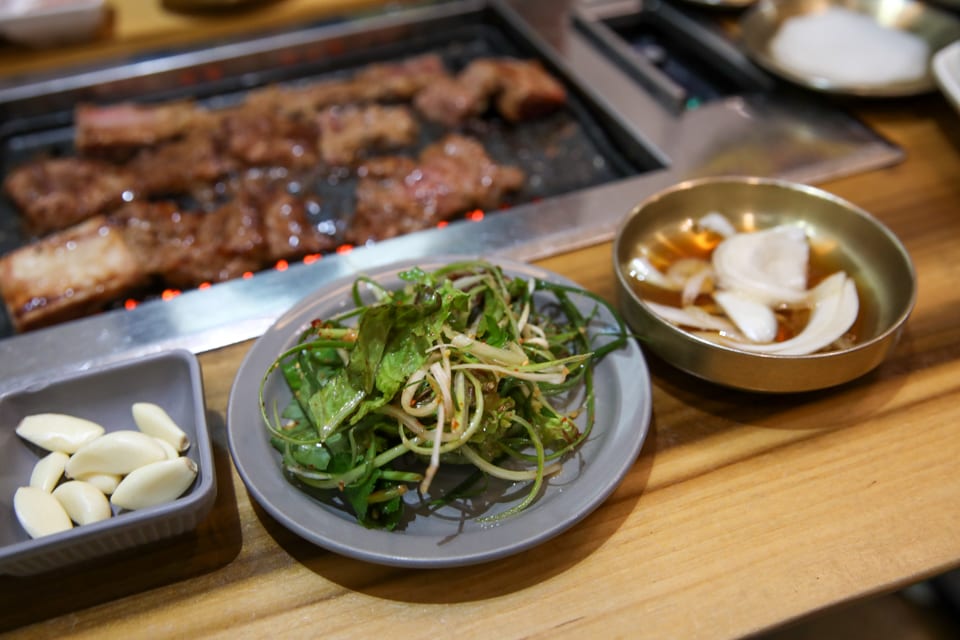
Marinated beef ribs anchor a table with a bit more formality, while marinated pork ribs anchor a budget-friendly gathering. Fresh Korean pork belly is the choice for those who want the meat’s own flavor with no marinade, and grilled bulgogi (seokswae) is a plate finished with the aroma of an open flame. Whichever grill dish you choose, finishing with naengmyeon is the Jinju-style formula. The logic behind this pairing lies in the ribs-then-noodles story of Part 13.
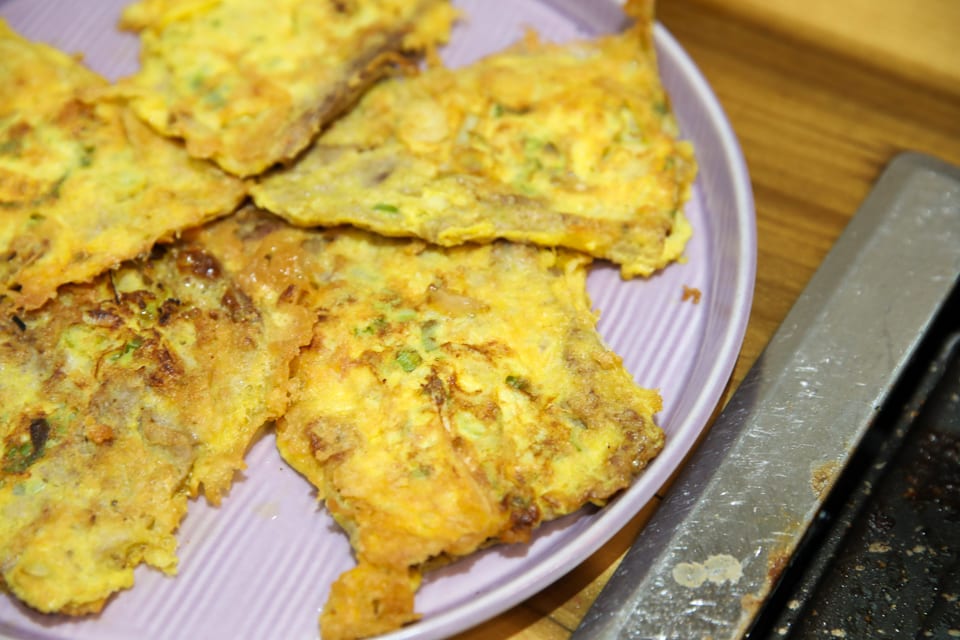
Three Meals, the Hot and Hearty Side
This is the group for elders who find naengmyeon a bit much, and for days that call for hot broth. Galbitang is a complete meal served with pot rice, hanwoo bulgogi mushroom hot pot is a soup dish that’s easy to share, and the seafood soft-tofu set has the everyday heartiness of a home meal. Given the location near hospitals, steady demand for this group keeps coming in.
King Dumplings, Small but Capable Support
The ₩7,000 king dumplings play three roles: a first plate for kids, a side for adults, and a top-up on days when naengmyeon alone isn’t quite enough. It’s the dish worth ordering first, before the rest of the table is set.
Optimal Combinations by Situation
– Dining alone: seokkeum-naengmyeon. Add yukjeon if you have room in the budget.
– Two people: mul-naengmyeon + bibim-naengmyeon + a shared plate of yukjeon.
– A family of four: 2 servings of marinated pork ribs + galbitang + king dumplings + shared naengmyeon (see the example in Part 14).
– A work dinner: marinated pork ribs, one serving per person + naengmyeon to finish.
– A table with elders: galbitang + yukjeon.
A Closer Look at the Three Meal Dishes
Let’s take a closer look at the meal dishes we passed over in the table. Galbitang at ₩16,000 is a complete meal, hot broth served together with pot rice: the anchor dish for elders who find naengmyeon a bit much and for days that call for hot soup. Hanwoo bulgogi mushroom hot pot at ₩15,000 has broth and ingredients easy to share among several people, making it a natural centerpiece for a family table. Seafood soft-tofu set at ₩12,000 is the kind of home-style dish you could eat every day without tiring of it, a regular choice for lunch demand near the hospital. All three share the same virtue: pot rice comes with every one of them.
Ordering by Budget
– ₩10,000s (dining alone): mul-naengmyeon or the seafood soft-tofu set. Add king dumplings and you’re still under ₩20,000.
– ₩20,000s (a proper solo meal): seokkeum-naengmyeon with king dumplings, or a full galbitang and pot rice meal.
– ₩20,000-30,000 per person (two or more): marinated pork ribs, one serving per person, with shared naengmyeon. This is the most common satisfaction range.
– ₩40,000+ per person (formal): a hosting table centered on beef ribs and yukjeon. A spread that lives up to the name of 40 years of tradition.
A First-Timer’s 3-Minute Way to Decide
Here’s a flowchart for deciding within three minutes in front of the menu. If cool is the goal, go mul-naengmyeon; if you need a kick, go bibim; if you want both, go seokkeum. If meat is the goal, first check whether there are two or more of you: ribs (for the marinade fans) or fresh pork belly (for the plain-meat fans); if you’re alone, go yukjeon. If hot is the goal, go galbitang. If there’s a child, add king dumplings to any table. Remember just this flowchart and no combination will fail you.
Why the Menu Has Twelve Dishes
There’s a common belief that a restaurant with a long menu lacks focus, but Eolchigi’s twelve dishes are built on a different logic. At the core are two pillars: naengmyeon, the summer pillar, and ribs-and-soup, the winter pillar. Every other dish is a branch growing off these two pillars. Yukjeon is a branch that grew out of the naengmyeon topping, galbitang is the soup version of the ribs pillar, and king dumplings are the side branch that attaches to either one.
So this menu isn’t twelve directions, it’s depth in two directions. This is the menu of a house that has dug into just two wells, naengmyeon and ribs, for 40 years, so the number of dishes doesn’t blur its focus. Whatever you order, the plate that arrives stands on the skill built into one of the two pillars.
The Menu the Season Chooses
In front of the menu, borrowing a sense of the season is also a good approach. In midsummer the answer is naturally the naengmyeon group, and as early autumn turns cool, the season for a ribs table arrives. In deep winter, galbitang and hot pot take the seat of honor, and in spring, every dish reaches an even balance. There’s also the fun of going against the season. The deep flavor of winter naengmyeon and fighting summer heat with hot galbitang are choices for those in the know. In the end, the twelve-dish menu means that whichever season you come, there’s an answer that fits the day.
Restaurant Basics
107 Cheonsu-ro, Jinju-si, Gyeongsangnam-do (Juyak-dong), open daily 10:00-21:00, phone +82-55-753-9233, on-site parking available. Seating includes the main hall, group seating and private rooms, and calling ahead is the fast way to arrange takeout. The deeper naengmyeon story continues in Part 1, and the practical side of a ribs table continues in Part 8 and Part 9.
Common Ordering Mistakes and How to Avoid Them
To close out the menu guide, here are the ordering mistakes that actually happen at the table. First, ordering naengmyeon and ribs at the same time. The naengmyeon arrives first and turns soggy, so the standard is ribs first, with naengmyeon ordered once three or four pieces of meat are left. Second, ordering yukjeon last. It’s a dish cooked to order, so ordering it early lets you enjoy it alongside the main dishes. Third, ordering one naengmyeon per person and leaving some unfinished. The naengmyeon that finishes a ribs meal is meant to be shared one bowl per two people. Fourth, not accounting for the child’s portion separately. What one plate of king dumplings could solve often turns into a mid-meal commotion instead.
All four have one thing in common: they’re a matter of order, not cost. Keep them in mind along with the pairing guide in this article, and you can order like a regular even on your first visit.
Wrapping Up the Menu Guide
After going through all twelve dishes, the conclusion turns out to be surprisingly simple. You don’t need to memorize this menu. All you need to remember are the two pillars (naengmyeon and ribs) and the three currents (cool, hot, and grilled); the situation decides the rest. Start from the single-bowl group if you’re alone, the grilled group if there are several of you, and the hot group if you’re with elders.
And no matter which group you start from, the original Jinju-style cold noodles are waiting at the end of the road. A ₩12,000 bowl of mul-naengmyeon is like the signature of this entire menu, so if it’s your first visit, whatever combination you choose, we recommend checking off that signature dish before you leave. 107 Cheonsu-ro, Jinju-si, daily from 10 a.m. to 9 p.m.
Closing the Menu
The breakdown of all twelve dishes is complete. If you’ve read this article before your visit, 30 seconds in front of the menu should be enough, not three minutes. Since ordering is faster, the time at the table grows longer, so spend it on the first sip of naengmyeon and the first bite of ribs. We hope you enjoy your order.
Appendix: One Last Check at the Register
One last practical tip. Before you pay, take a moment to look back at today’s combination. It will make your next order even more accurate. You can’t take in all twelve dishes at once, so saving this guide and expanding by one group with each visit is the most enjoyable way to master this menu.
Frequently Asked Questions
If you had to pick just one signature dish, what would it be?
Mul-naengmyeon. It’s the bowl that sets the standard for the original Jinju-style cold noodles.
Can the prices change?
The in-house menu board always takes priority. If it differs from the prices in this article, the menu board at the restaurant is correct.
Which dishes are available for takeout?
Most dishes can be taken out. Call +82-55-753-9233 and tell them the dish, and you’ll be guided through how to package it as well.
What’s the cheapest combination to order?
A single order of king dumplings at ₩7,000 is the lowest option, and the seafood soft-tofu set at ₩12,000 is the lowest-priced full meal.
How many visits does it take to try all 12 dishes?
Alternating between the single-bowl group and the grilled group, about five or six visits will complete the whole menu. It’s a fun challenge for regulars.
Are there any seasonal-only dishes?
All 12 dishes on the menu are fixed year-round. The season changes the ideal combination, not the menu itself.
Which dish comes out the fastest?
The single-bowl group is the easiest to predict since the cooking flow is consistent. If you’re in a hurry, ordering king dumplings ahead of time is a good trick.
Which dish has the biggest portion?
By fullness, many guests rank the galbitang pot rice meal and seokkeum-naengmyeon near the top.
Are takeout prices the same as dine-in?
Yes, prices follow the same menu board for both. Only the container differs for takeout.
Can I ask for something that’s not on the menu?
The basic offering is the 12 dishes on the menu. For small requests like adjusting the spice level, please check with staff when you order.
Is there somewhere I can check the menu before I visit?
You can check it on the restaurant’s registered menu on Naver Place. The list and prices in this article are based on the same source.
More Articles Worth Reading
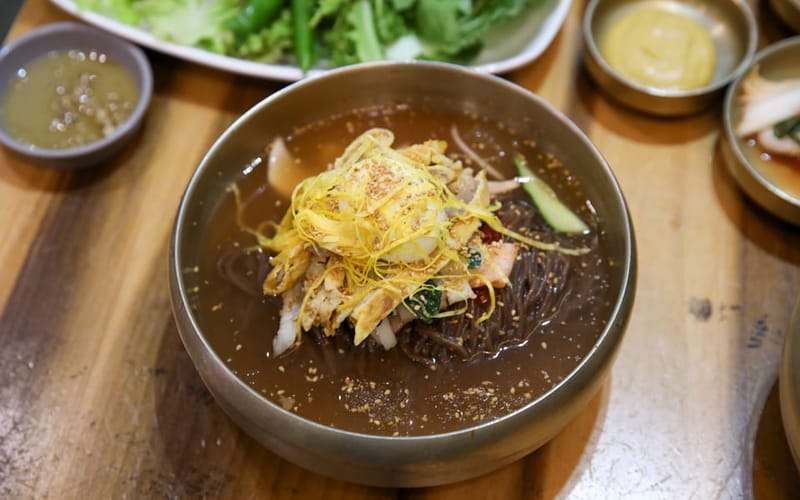 A Complete Guide for Anyone Looking for Jinju Naengmyeon: Eolchigi in Juyak-dongIf you still have questions, this article answers them. It’s the companion page to the Eolchigi menu article.
 Ribs First, Cold Noodles Last: The Jinju-Style Story of Galbi-Then-NaengmyeonThis is the root article where this piece’s Eolchigi menu logic comes from. Reading galbi-then-naengmyeon first completes the flow.
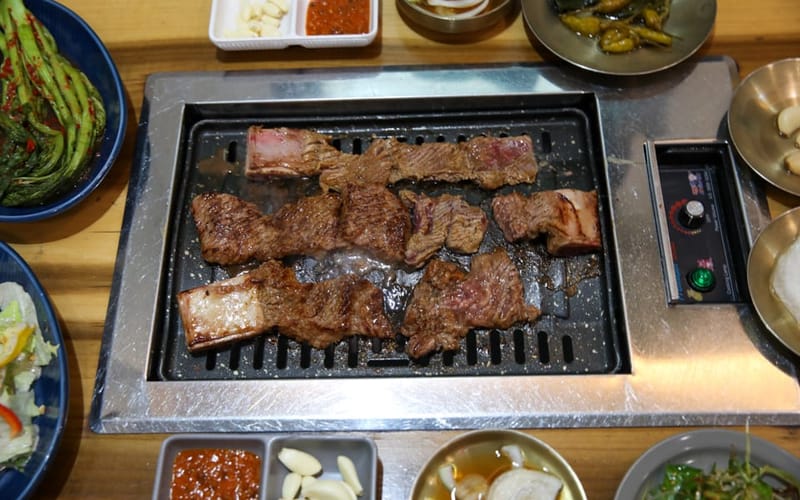 Family Dining in Jinju: What Makes a Place Where Three Generations Enjoy One TableThe story set aside as a side branch of the Eolchigi menu article is told in full here. This is the detailed version centered on family dining in Jinju.
Official References
- [Local Government Official] Checking the comprehensive guide to tourist attractions and festivals published by Jinju Tourism (Jinju City’s official tourism portal) will help you plan your Eolchigi menu visit more accurately. Jinju Tourism (Jinju City Official Tourism Portal) · Comprehensive Guide to Attractions and Festivals
- [National Agency] For up-to-date practical reference on the Eolchigi menu, the Ministry of Food and Drug Safety’s Food Safety Korea food safety information page is the standard. Ministry of Food and Drug Safety, Food Safety Korea · Food Safety Information Guide
The links above are simple pointers to the relevant topic pages of public institutions and portals whose accessibility we verified. The terms of use for each institution’s materials follow the official conditions each institution has posted, such as its Korea Open Government License (KOGL) type, and the body text does not reproduce or quote any institution’s copyrighted work.